

The short answer
A bulk SMS business sends text messages on behalf of other businesses: one-time passwords, transaction alerts, reminders and marketing campaigns. You buy message delivery from operators or aggregators at wholesale rates, run it through an SMS platform, and sell it to businesses per message or in prepaid packs, keeping the margin.
You can start as a reseller on a white-label SMS platform with no infrastructure of your own, and grow into an aggregator with direct operator connections as your volumes increase. The business is built on three things: reliable routes, strict compliance and customers who send every day, such as banks, e-commerce, healthcare and education.
How bulk SMS works
- A business uploads a contact list in your web portal, or its own system calls your SMS API.
- Your platform checks the sender ID, template and consent rules, charges the account and queues the messages.
- Messages are submitted over SMPP to operators or aggregators, who deliver them to handsets.
- Delivery reports come back from the operator and are shown to the customer and posted to their system.
- Replies, where enabled, are routed back to the business on a long code or short code.
SMS still reaches almost every mobile phone without an app or data connection, which is why it remains the default channel for OTPs and critical alerts.
Types of business SMS
- Transactional: OTPs, bank alerts, order and delivery updates. Time-critical and allowed at any hour, usually on priority routes.
- Service: reminders, renewals and account information sent to existing customers.
- Promotional: offers and campaigns, allowed only to people who have consented and, in many countries, only during set hours.
- Two-way: surveys, confirmations, keyword replies and customer support conversations.
Most countries treat these categories differently for pricing, routing and regulation, so your platform must keep them apart.
Business models: reseller, aggregator, hub

- Reseller. You sell SMS under your own brand on a provider's white-label platform. No routes or infrastructure to manage; you focus on sales and customer support. The fastest and lowest-cost way to start.
- Aggregator. You run your own SMS platform and connect to operators and other aggregators directly, choosing routes and setting prices. Higher margins, more operational work and more compliance responsibility.
- Hub. You interconnect aggregators and carriers across countries, trading international A2P traffic. See our SMS hubbing guide.
Many companies move along this path: reseller first to build a customer base, then aggregator once volumes justify direct connections.
Sender IDs, long codes and short codes
| Alphanumeric sender ID | Long code | Short code | |
|---|---|---|---|
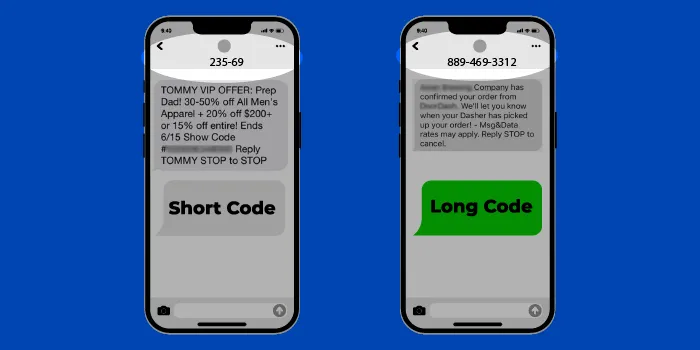
| Looks like | A brand name, for example VXVLLY | A normal phone number | A 5 or 6 digit number |
| Replies | No | Yes | Yes |
| Best for | OTPs, alerts and branded messages | Two-way conversations and local presence | High-volume campaigns and keyword replies |
| Setup | Registration rules vary by country | Quick to get | Longer approval and higher cost |
Which options are allowed differs by country: India uses registered six-character headers, the US uses registered 10DLC numbers, toll-free numbers and short codes, and many countries require sender IDs to be pre-registered.
Compliance: DLT, 10DLC and consent
Compliance is the most important part of an SMS business. Unregistered or non-compliant messages are blocked by operators, and repeated violations can close your routes.
- India: every sender must register on a TRAI DLT platform, with registered headers (sender IDs), message templates and consent records. Messages that do not match a registered template are blocked.
- United States: business texting on ordinary numbers requires 10DLC brand and campaign registration, toll-free numbers need verification, and TCPA rules require prior consent and opt-out handling.
- Everywhere: honour opt-outs immediately, respect quiet hours for promotional messages, keep consent records and never send to purchased lists.
Our guide to 10DLC vs DLT explains both systems in detail.
What your SMS platform needs
- Web portal for uploading contacts, scheduling campaigns, personalising messages and viewing reports.
- APIs (HTTP and SMPP) so customers can send OTPs and alerts from their own systems.
- Routing by country, operator and message type, with automatic failover.
- Compliance tools: sender ID and template management, DLT and 10DLC registration support, opt-out lists and consent records.
- Billing: prepaid credits, per-country price lists, invoices and reseller margins.
- Reseller management so you can appoint sub-resellers with their own branding and pricing.
- Delivery reports and analytics per campaign, country and route.
- Other channels: WhatsApp and RCS on the same platform, so customers can move to richer messaging without changing provider.
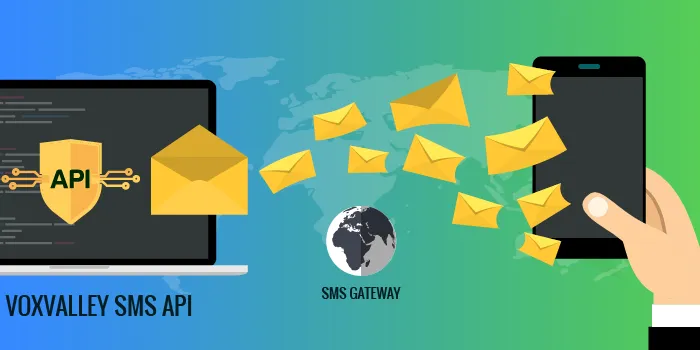
Voxvalley's Messaging API covers SMS, WhatsApp and Google RCS on one platform, with traffic sent through telecom operators only, and is available white label or on monthly rental for resellers.
Pricing and margins
- Per message: priced by destination country and message type. Long messages are split into segments and billed per segment.
- Prepaid packs: customers buy credits in advance, which protects your cash flow.
- Volume tiers: lower prices for higher monthly commitments.
- Value-added fees: sender ID registration, dedicated numbers, short codes and premium support.
Per-message margins are thin, so profit comes from volume and from steady senders. A bank or e-commerce customer sending OTPs every day is worth far more than occasional campaign senders. Watch for grey-route offers that look cheap: they are often blocked without warning and damage your reputation with customers.
Launch in seven steps
- 1. Choose your market and model: reseller or aggregator, domestic or international.
- 2. Understand the rules in each country: registration, templates, consent and quiet hours.
- 3. Choose a platform: white-label reseller panel, or your own platform with routes.
- 4. Secure reliable routes through operators, with a backup route for each destination.
- 5. Set your prices and packs, leaving room for reseller margins and promotions.
- 6. Onboard your first customers, starting with businesses that send daily transactional messages.
- 7. Add channels such as WhatsApp and RCS as customers ask for richer messages.
Voxvalley has been building messaging and voice platforms since 2009 for resellers, aggregators and enterprises. Talk to our team about starting or growing your SMS business.